Appendix A: Methodology
⏱ 11 min read
How This Listening Exercise Was Conducted
This report is built from a listening exercise conducted between October 2025 and March 2026 in 2 rounds. The exercise comprised 78 total interviews and calls with 58 unique interviewees from Canadian democracy organizations, funders, journalists, human rights bodies, Indigenous governance practitioners, academics, civic technology innovators, municipal democracy specialists, and adjacent actors.
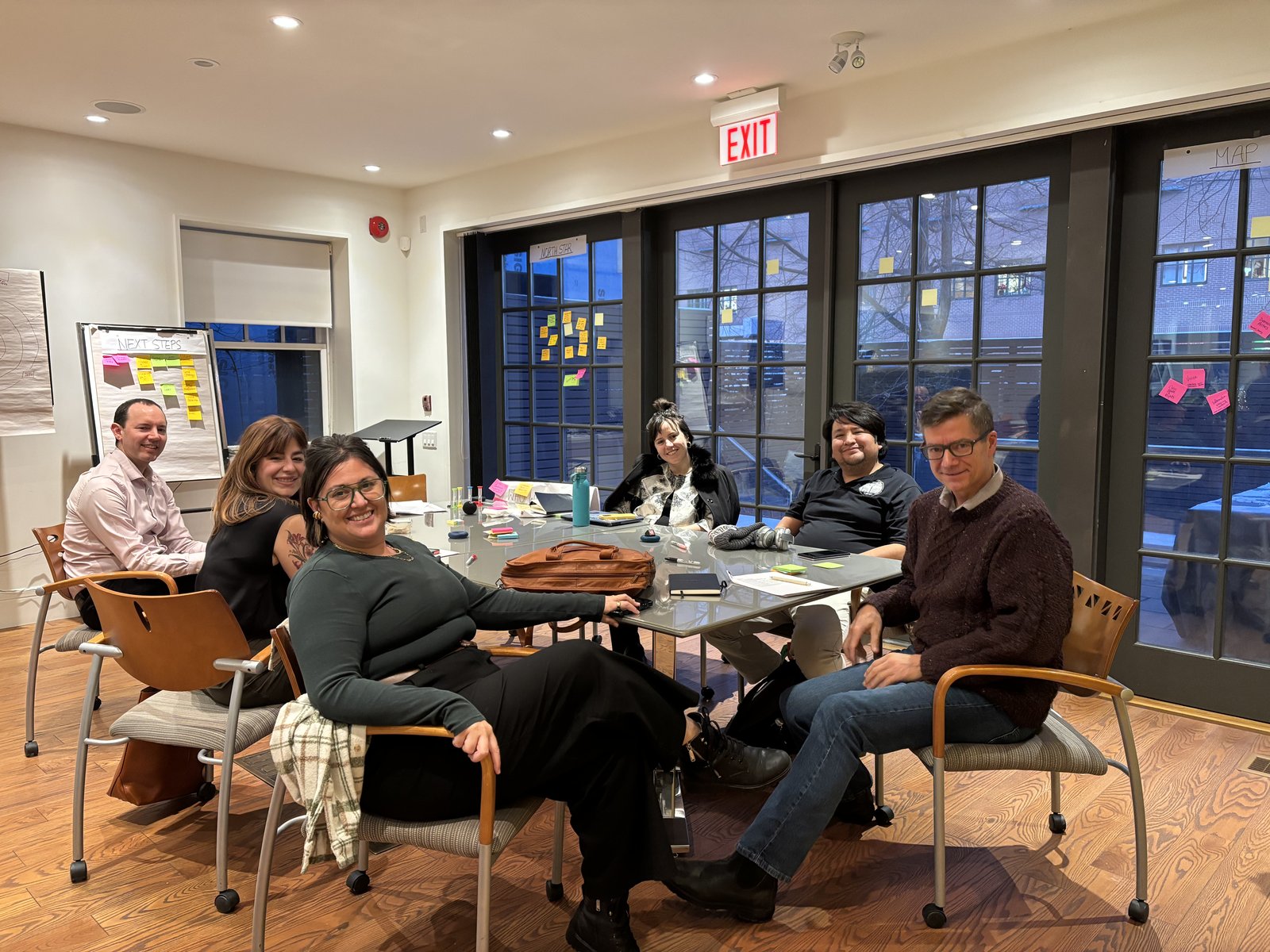
The first round (core sector interviews) ran from October 10 to December 5, 2025, and included 32 interviewees across 40 interview sessions. 36 of these sessions were recorded with consent, producing 42 hours and 21 minutes of audio and 273,805 words of transcript. 4 interviews were conducted with notes only. The first round concluded with a 7-hour in-person co-designer review session at the Samara Centre for Democracy office in Toronto on December 4, 2025, followed by the production and distribution of an interim report in December 2025.
The second round (adjacent sector interviews) ran from February 5 to March 18, 2026, and included 26 new interviewees not interviewed in the first round. 38 sessions were conducted: 27 recorded interview sessions with the 26 new interviewees, producing approximately 24 hours and 8 minutes of audio and 205,819 words of transcript, plus 11 unrecorded follow-up calls with co-designers and select first-round organizations. The second round deliberately expanded the interview pool to adjacent sectors underrepresented in the first round, including journalism (Canadian Association of Journalists, The Walrus, Women in Journalism, Investigative Journalism Foundation), human rights (BC Human Rights Commissioner, Canadian Race Relations Foundation, Equitas), Indigenous governance (National Urban Indigenous Coalition Council), municipal and participatory democracy (CityHive, IAP2 Canada, Municipal Elections Barometer, former Vancouver City Councillor Andrea Reimer), arts and education (OCAD University, SFU), conservative democratic voices (former Conservative Party leader Erin O'Toole, Runnymede Society), and organizations working on hate, extremism, and community safety (Canadian Anti-Hate Network, Strong Cities Network).
In total, the exercise produced 63 recorded interviews, approximately 66.5 hours of recorded conversation, and 479,624 words of transcript across 55 clean transcript files. 3 interviews have no transcript upon request and are represented by interview notes only.
All interviews followed a semi-structured guide with 20 core questions, designed for consistency without rigidity. The first half of each interview was open-ended, inviting interviewees to describe the sector as they experienced it. The second half posed specific questions, including an opening visualization prompt ("Close your eyes and picture the Canadian democracy sector: what image comes to mind?"), questions about sector boundaries and community belonging, lowest-hanging fruit and biggest barriers, a net promoter-style question, a "$100 million magic wand" resource allocation question, a 2050 vision question, and a feelings question about sector success and failure. The guide was consistent across both rounds, allowing direct comparison of responses.
3 interviews included additional participants beyond the primary interviewee: Odette McCarthy's interview included Angie Mapara-Osachoff (Director of Canadian Programs, Equitas); Rebecca Smith's interview included Cara Lenoir (IAP2 Canada); and Erin O'Toole's interview included Sam Reusch (Apathy is Boring). Joint interviews are treated as 1 organizational perspective, not as multiple data points.
The Snowball Methodology
The interview methodology followed an iterative "snowball" design. In early interviews, the interviewer (Steve Joneslee, né Lee) posed the structured questions with minimal additional content. As the exercise progressed, Steve incorporated insights from earlier interviews into his framing, presenting emerging themes, testing propositions, and sharing anonymized observations for interviewees to react to. This means the interviewer's speech evolved across the arc of the exercise, and later interviewees were responding to a more developed prompt than earlier ones.
This approach is both a methodological strength and a complication. It is a strength because it allowed each successive interview to build on the insights of previous ones, producing a progressively richer and more nuanced set of responses. Proposals that were vague in early interviews were refined and tested in later ones. Tensions that emerged could be probed. The exercise functioned less like a static survey and more like a facilitated sector-wide conversation conducted 1 interview at a time.
It is a complication because themes introduced by Steve and endorsed by interviewees carry different analytical weight than themes raised unprompted. An interviewee who agrees that the sector is fragmented when Steve presents that finding is providing a different kind of evidence than one who describes fragmentation unprompted. Both are data, but they are different kinds of data. The analytical framework described below was designed to account for this distinction.
The snowball evolution followed a discernible arc. In first-round interviews 1 through 4 (the co-designers and earliest participants), Steve posed the structured questions with almost no snowball content. Every theme from these interviews is genuinely unprompted, making them the highest-confidence data in the exercise. In interviews 5 through 15, Steve began sharing the "islands on an ocean" image, the progressive conflation concern, and the observation that "everyone says they're a convener." The protectionist/invitationalist spectrum and the capital-D/small-d distinction appeared. In interviews 16 through 25, Steve introduced the sustainability analogy (democracy as a sector paralleling the climate sector 20 years ago), funder dynamics, and the cognitive dissonance between 2050 vision answers and $100M question answers. In interviews 26 through 40 (late first round), Steve presented the full landscape, including specific organizational stories, the endowment concept, and questions about whether existing institutions could house coordination.
The inflection point came between rounds. Following the co-designer review session (December 4, 2025) and the distribution of an interim report, Steve's framing underwent a fundamental shift. The first round had asked: "How should the democracy sector coordinate internally?" The second round asked: "How do we build multi-sector coalitions for democratic resilience?" This shift was driven by what Steve heard in the first round: the sector alone is too small, too poorly funded, and too inward-looking to meet the challenge. The answer had to involve adjacent sectors that depend on democratic conditions but do not identify as "democracy organizations."
In second-round interviews 41 through 50, Steve presented the evolved coalition-building framing, multi-sector initiative ideas, and endowment concepts for testing with new interviewees who brought dramatically different vantage points (press freedom, public participation, urban planning, arts). In interviews 51 through 58, Steve's framing was most developed, and interviewees responded to a near-complete picture of the sector's self-diagnosis and proposals. Tracking this evolution is analytically important because it explains why certain themes appear more frequently in the second round than the first: in some cases, this reflects Steve's prompting rather than unprompted emergence. The coding framework described below distinguishes these cases.
The Analytical Framework
The analysis was governed by a framework developed through pilot testing on 4 transcripts in early sessions and refined through application across the full dataset. Its core principles:
Only interviewee speech is coded as data. Steve's speech is treated as context. This is the most important methodological decision. Because the snowball approach means Steve's speech contains synthesized findings from previous interviews, counting his framings as data would inflate theme counts. When Steve says "other interviewees have described the sector as fragmented" and the interviewee responds "I agree," that agreement is coded as endorsement, not as an unprompted mention of fragmentation.
Every interviewee response is coded into 1 of 4 tiers, reflecting how the theme emerged in the conversation:
Unprompted means the interviewee raised the theme before Steve introduced it, or in response to the 20 structured questions. Unprompted counts carry the highest analytical weight because they reflect what interviewees brought to the conversation on their own. Example: an interviewee describes the sector as "fragmented" before the interviewer mentions that word.
Endorsed means the interviewee agreed with a framing Steve presented from other interviews. Endorsed themes count as data but are flagged as prompted. Example: Steve says "other interviewees have described the sector as fragmented" and the interviewee responds "yes, absolutely."
Challenged means the interviewee pushed back on Steve's framing. Challenged themes are analytically valuable as markers of dissent and are tracked separately. Example: Steve presents the idea of a democracy endowment and the interviewee argues against it.
Elaborated means the interviewee took a Steve-introduced concept and added substantial new content, going beyond agreement to develop the idea further. Example: Steve mentions the endowment idea and the interviewee proposes a specific governance structure for it.
Verbosity is not equated with emphasis. Some interviewees are expansive; others are terse. A theme mentioned once with conviction carries as much weight as a theme elaborated over 500 words. Coverage (how many interviewees raised a theme) matters more than volume (how many words they devoted to it).
Co-designer follow-up sessions are not double-counted. The 6 co-designers (Sam Reusch, Niamh Leonard, Amanda Munday, Mason Ducharme, John Beebe, and Robin Prest) each participated in an initial interview and 1 or more follow-up sessions. Their initial interviews are coded as data on the same terms as any other interviewee. Follow-up sessions, which occurred after the co-designer review session and involved reacting to Steve's synthesis, are coded as reactions to emerging findings rather than unprompted testimony and weighted accordingly.
Joint interviews are treated as 1 organizational perspective. Where 2 people from the same organization participated on the same call, their combined input is treated as a single data point for theme counting purposes.
Who Was Interviewed
The 58 interviewees represent a deliberate cross-section of actors whose work intersects with democratic life in Canada, identified through snowball sampling beginning with the co-designer organizations and expanding outward through their networks.
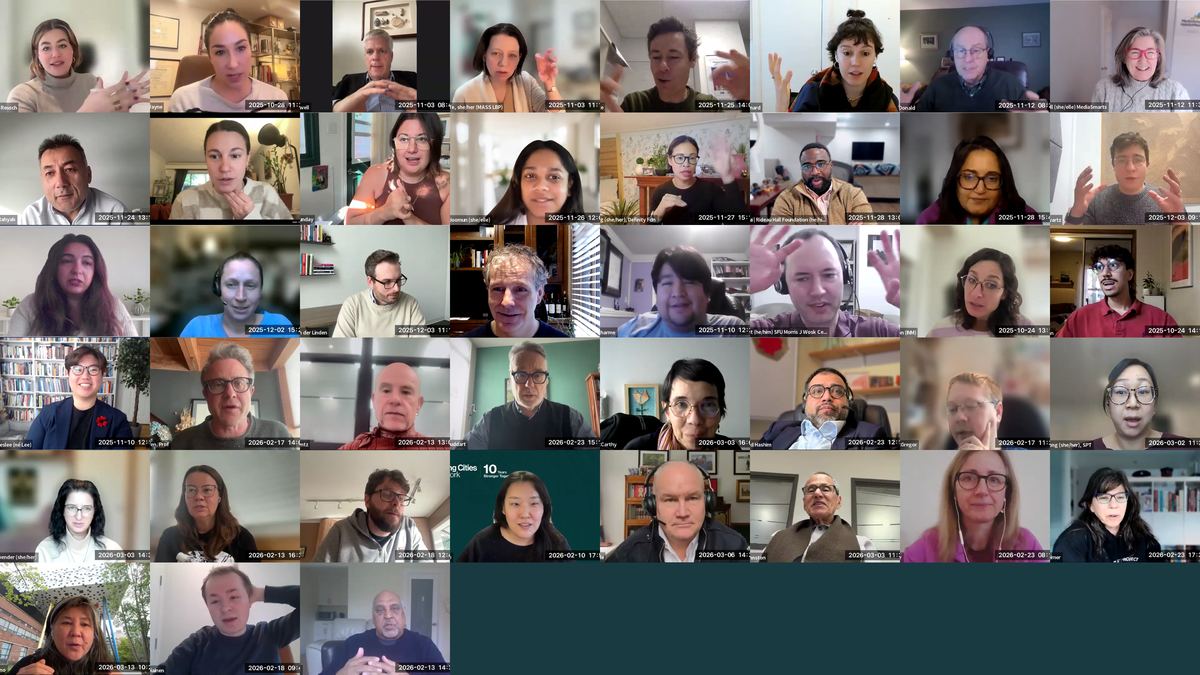
- 1. Sam Reusch, Apathy is Boring (co-designer)
- 2. Kasari Govender, BC Human Rights Commissioner
- 3. Anna Miller, Better Politics Foundation
- 4. Wasiimah Joomun, Canadian Alliance of Student Associations (CASA)
- 5. Evan Balgord, Canadian Anti-Hate Network
- 6. Brent Jolly, Canadian Association of Journalists
- 7. Mohammed Hashim, Canadian Race Relations Foundation
- 8. Mason Ducharme, Centre for First Nations Governance (co-designer)
- 9. Taylor Owen, Centre for Media, Technology & Democracy (McGill)
- 10. Ben Rowswell, Circle for Democratic Solidarity
- 11. Rowan Gentleman-Sylvester, CityHive
- 12. Lindsay Mazzucco, CIVIX
- 13. Erin O'Toole, Former MP, former leader of the Conservative Party of Canada
- 14. John Beebe, Democratic Engagement Exchange, TMU (co-designer)
- 15. Shlomit Broder, Digital Public Square
- 16. Paul Jorgenson, Elections Canada
- 17. Lindsay Brumwell, Equal Voice
- 18. Odette McCarthy, Equitas
- 19. Niamh Leonard, Euphrosine Foundation (co-designer)
- 20. Chris Mohan, Fair Vote Canada
- 21. Rebecca Smith, IAP2 Canada
- 22. Bruce MacDonald, Imagine Canada
- 23. Ginger Gosnell-Myers, Fellow at SFU Morris J. Wosk Centre for Dialogue
- 24. Abby Wong, Individual
- 25. Chris Beall, Information Integrity
- 26. Malorie Flon, Institut du Nouveau Monde (INM)
- 27. Allen Sutherland, Institute on Governance
- 28. Sadia Zaman, Inspirit Foundation
- 29. Zane Schwartz, Investigative Journalism Foundation (IJF)
- 30. Sarah Yaffe, MASS LBP
- 31. Allan Northcott, Max Bell Foundation
- 32. Maggie MacDonald, McConnell Foundation
- 33. Kathryn Ann Hill, MediaSmarts
- 34. Amanda Munday, New Majority (co-designer)
- 35. Damon Johnston, National Urban Indigenous Coalition Council
- 36. Victoria Kuketz, Obama Foundation Scholar & Public Policy Forum Fellow
- 37. Ana Serrano, OCAD University
- 38. Ajit Mehat, Polity Co-op
- 39. Maiwand Rahyab, Resilient Societies
- 40. Ikem Opara, Rideau Hall Foundation
- 41. Elana Bloomfield, Ronald S. Roadburg Foundation
- 42. Tim Haggstrom, Runnymede Society
- 43. Beatrice Wayne, Samara Centre for Democracy
- 44. Stuart Poyntz, Simon Fraser University (SFU)
- 45. Robin Prest, SFU Morris J. Wosk Centre for Dialogue (co-designer)
- 46. Melissa Wong, Social Planning Toronto
- 47. Eunhye Lee, Strong Cities Network
- 48. Umair Ashraf, The Canadian Muslim Vote (TCMV)
- 49. Andre Cote, The Dais (TMU)
- 50. Michael McGregor, The Municipal Elections Barometer
- 51. Jennifer Hollett, The Walrus
- 52. Andrea Reimer, Former Vancouver City Councillor
- 53. Stephen Huddart, Victoria Forum
- 54. Aleksi Toiviainen, Vote16
- 55. Clifton van der Linden, Vox Pop Labs / McMaster University
- 56. Kiran Nazish, Women in Journalism
- 57. Hayden King, Yellowhead Institute
- 58. Amanda Arella, YWCA Canada
The exercise was funded by the Catherine Donnelly Foundation and the Euphrosine Foundation. The interviewer was Steve Joneslee (né Lee), Principal Consultant, Joneslee Consulting Inc. (formerly Steve S.J. Lee Consulting Inc.).
Co-Designer Role
6 organizations served as co-designers for the exercise, contributing additional time and leadership beyond the standard interview: Apathy is Boring (Sam Reusch), Centre for First Nations Governance (Mason Ducharme), Democratic Engagement Exchange at TMU (John Beebe), Euphrosine Foundation (Niamh Leonard), New Majority (Amanda Munday), and SFU Morris J. Wosk Centre for Dialogue (Robin Prest).
Co-designers participated in an initial interview following the same guide as all other participants, joined a 7-hour in-person review session at the Samara Centre for Democracy on December 4, 2025, and provided ongoing feedback through follow-up calls during the second round. Their interviews are coded as both data and design input. Their follow-up sessions, conducted after they had reviewed the interim report and participated in the review session, are coded as reactions to Steve's synthesis rather than unprompted testimony. This distinction is important: a co-designer who endorses a finding in a follow-up call is confirming what they have already seen in synthesis form, not providing new unprompted evidence.
Limitations
The sample has several known biases, many of which were confirmed by the data itself.
Geographic concentration: the interview pool skews heavily toward Toronto and Ottawa, with some representation from Vancouver and Montreal but limited coverage of Atlantic Canada, the Prairies, and Northern communities. This reflects where democracy organizations are headquartered, but it means the exercise underrepresents the democratic experiences and concerns of people outside major urban centres.
Language: the exercise was conducted almost entirely in English. Only 1 interviewee (Malorie Flon of the Institut du Nouveau Monde) represented a primarily francophone organization, and that interview was conducted in English. The democratic experiences, institutional landscape, and civic culture of francophone Canada are substantially underrepresented.
Ideological lean: the sample skews progressive. This was confirmed by the data: 26 interviewees unprompted raised the concern that the democracy sector is conflated with progressive politics. Only 2 interviewees (Erin O'Toole, Tim Haggstrom) brought explicitly conservative democratic perspectives. Both unprompted confirmed the perception of progressive orientation from the outside. The listening exercise's own participant list is evidence of the pattern it documents.
Indigenous representation: only 3 Indigenous-led organizations (Centre for First Nations Governance, Yellowhead Institute, National Urban Indigenous Coalition Council) brought Indigenous governance perspectives, and the exercise was conducted within a Western democratic framework that does not encompass the full range of Indigenous governance traditions.
Sample size: 58 interviewees is substantial for qualitative research but does not constitute a representative survey of all actors in Canadian democratic life. The findings should be read as a richly textured picture of how a specific cross-section of informed actors perceive the state of Canadian democracy, not as a statistical portrait of the sector as a whole.